The Generation That Could Not Discern the True God
From Baal Worship to Modern-Day Idola

Abstract
Throughout biblical history, the people of God have repeatedly faced the temptation to exchange the worship of the true God for systems of idolatry that promise immediate material benefit. The ancient conflict between the worship of Yahweh and the Canaanite deity Baal represents one of the clearest examples of this spiritual struggle. This article explores how Baal worship functioned not merely as a religious practice but as a socio-economic and cultural system promising rain, fertility, prosperity, and protection. By examining Israel’s transition from wilderness dependence to agricultural life in the Promised Land, this study shows how cultural comparison and social pressure contributed to Israel’s gradual embrace of syncretism. The prophetic confrontation on Mount Carmel provides a theological framework for understanding the spiritual crisis of a generation unable to discern the true God. The article concludes by examining contemporary forms of idolatry, particularly religious syncretism and ideological movements that blur distinctions between faith traditions. Ultimately, the study calls the modern church to recover biblical discernment and to reaffirm the exclusive lordship of Jesus Christ.
From Baal Worship to Modern-Day Idolatry
Throughout Scripture, one recurring tragedy defines the spiritual history of humanity: the inability to discern the true God. Again and again, people who witnessed God's power turned aside to idols substitutes that promised immediate satisfaction but ultimately led to spiritual emptiness. This pattern is not merely an ancient religious conflict. It is a timeless narrative revealing humanity’s persistent tendency to exchange the living God for systems that promise prosperity, protection, and fulfillment apart from Him.
The story of Israel’s struggle with Baal worship provides a powerful lens through which we can understand modern idolatry. What happened in ancient Canaan continues to unfold in new forms today.
Idols: The Human Attempt to Control the Divine
Idolatry has always been more than the worship of carved images. At its core, idolatry is humanity’s attempt to secure life, prosperity, and protection apart from dependence on God.
In many ancient societies, idols functioned within systems of power and economics. Religious structures were often maintained by political and wealthy elites who shaped belief systems in ways that influenced social order and control. These systems tapped into the deepest needs of human beings—food, fertility, security, and success—promising divine favor in exchange for rituals and devotion.
Such systems created a powerful emotional and spiritual bond between people and the idols they worshiped. Faith was redirected away from the unseen Creator and anchored instead in visible, material systems that seemed capable of delivering immediate results.
Scripture repeatedly warns against this substitution. The psalmist declares:
“Their idols are silver and gold, the work of human hands. They have mouths, but do not speak; eyes, but do not see.” (Psalm 115:4–5, ESV)
The tragedy of idolatry is not simply false worship; it is misplaced trust.
The Economic Theology of Baal
The gods of Canaan were not merely spiritual figures; they were tied directly to economic survival.
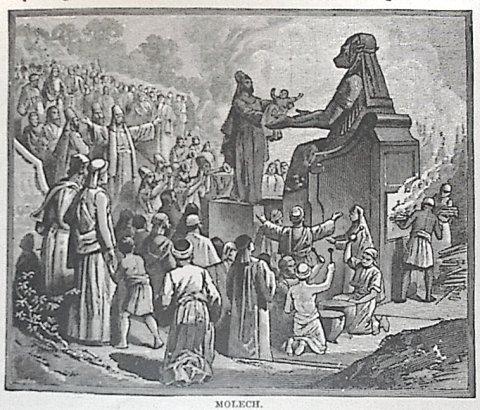
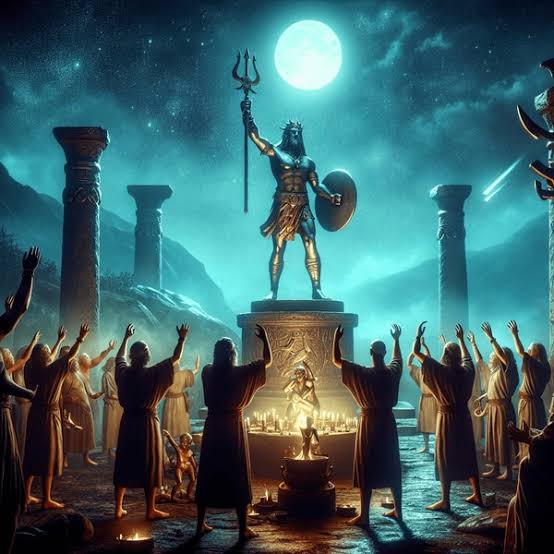
Baal, the storm god, was believed to control rain an essential element for agriculture in the ancient Near East. Asherah was associated with fertility, promising children and fruitfulness to families and communities. Molech demanded the most horrifying devotion of all: child sacrifice, believed to secure favor, prosperity, and protection in times of crisis.
This entire religious system operated on a transactional theology: offerings in exchange for blessings.
When Israel entered Canaan, they did not merely encounter foreign religious ideas they encountered a well-established economic worldview that had functioned for centuries before Israel became a nation.
From Wilderness Dependence to Promised Land Responsibility
The transition from the wilderness to the Promised Land created a spiritual crisis for Israel.
In the wilderness, Israel depended entirely on God for survival. Food came from heaven in the form of manna. Water flowed from rocks. Protection came directly from the Lord’s hand. Every provision was unmistakably divine.
But the Promised Land introduced a different season. God promised abundance, yet that abundance would come through human labor.
The Lord declared to Moses:
“I have come down to deliver them out of the hand of the Egyptians and to bring them up out of that land to a good and broad land, a land flowing with milk and honey.” (Exodus 3:8, ESV)
Milk and honey are not raw resources; they are processed products. They require time, labor, cultivation, and stewardship. The blessing of the land would come through work, patience, and obedience.
God was transitioning Israel from childlike dependence to mature stewardship.
But spiritual maturity can be difficult. When the process of growth felt slow or uncertain, Israel began looking for shortcuts.
The Seeds of Idolatry
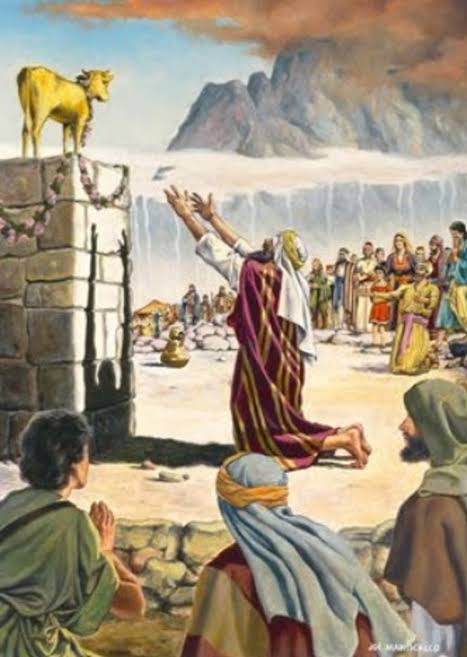
Israel had lived in Egypt for more than 430 years (Exodus 12:40). During that time they were surrounded by Egyptian religious systems and idol worship. Even after their deliverance, those cultural memories likely remained embedded within their worldview.
During their forty years in the wilderness, they were largely separated from surrounding pagan systems. Yet once they entered Canaan, they encountered neighboring nations whose societies were saturated with idolatry.
Agriculture, land ownership, family prosperity, and political survival all seemed tied to the worship of local deities.
The temptation was powerful: if the surrounding nations prospered through the worship of Baal, perhaps Israel could honor Yahweh while also appeasing these other gods.
The Book of Judges records this tragic pattern:
“And the people of Israel did what was evil in the sight of the Lord. They forgot the Lord their God and served the Baals and the Asheroth.” (Judges 3:7, ESV)
Idolatry did not arrive suddenly it entered gradually through comparison.
The Ideology of Comparison
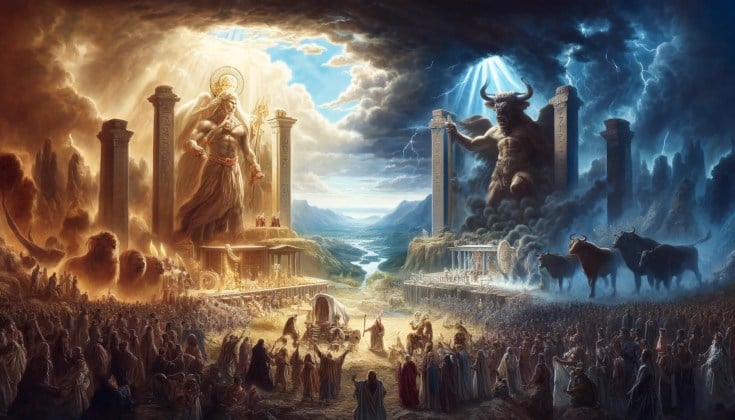
Instead of rejecting the false gods of Canaan outright, many Israelites began blending their worship of Yahweh with the worship of Baal.
This spiritual compromise is known as “syncretism” the mixing of religious systems.
In their minds, Yahweh was still God. Baal was simply another power that might help secure rain, crops, fertility, or victory in battle.
Faith became divided.
Yet Scripture consistently teaches that the Lord does not share His glory with idols.
“I am the Lord; that is my name; my glory I give to no other, nor my praise to carved idols.” (Isaiah 42:8, ESV)
The Crisis of Mount Carmel
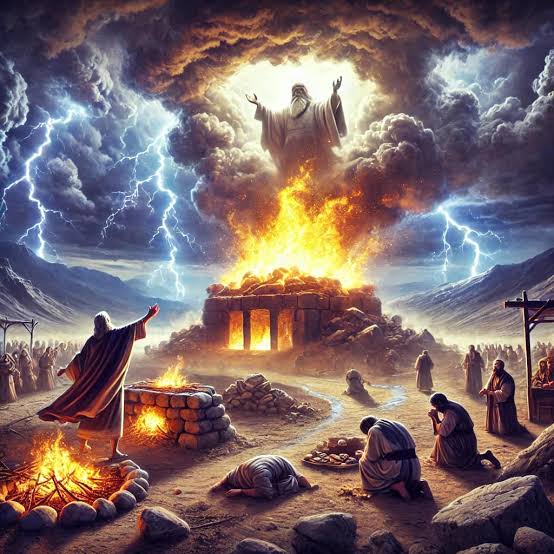
The conflict between Yahweh and Baal reached its peak during the reign of King Ahab and Queen Jezebel in the ninth century BC. Under their rule, Baal worship became the official religion of the Northern Kingdom of Israel.
Temples were built for Baal, and prophets of Yahweh were persecuted.
In response, the prophet Elijah issued a dramatic challenge on Mount Carmel.
He confronted the people with a piercing question:
“How long will you go limping between two different opinions? If the Lord is God, follow him; but if Baal, then follow him.” (1 Kings 18:21, ESV)
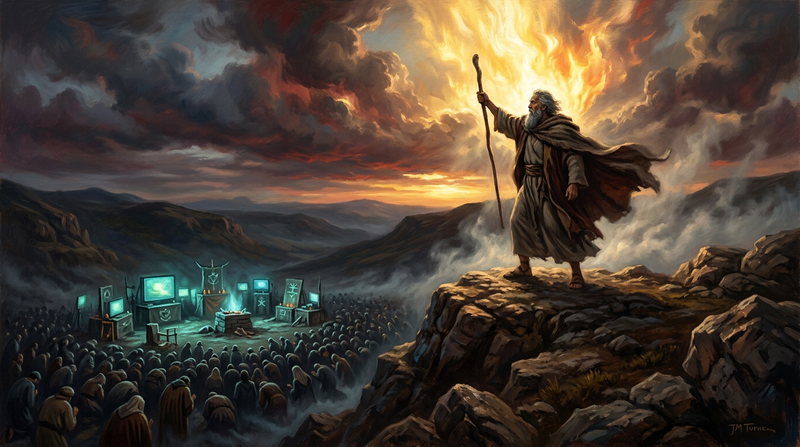
Elijah challenged 450 prophets of Baal to call down fire from heaven upon their sacrifice. From morning until evening they cried out, danced, and cut themselves in desperation. But nothing happened.
Baal did not answer.
Then Elijah prayed a simple prayer to the Lord. Immediately, fire fell from heaven, consuming the sacrifice, the altar, the water around it, and even the dust.
The people fell on their faces and declared:
“The Lord, he is God; the Lord, he is God.” (1 Kings 18:39, ESV)
Yet even after witnessing such a miracle, Israel continued to drift toward idolatry. The problem was not a lack of evidence it was the condition of the human heart.
Modern-Day Baals
While the physical idols of Baal and Asherah may seem distant from modern life, the underlying principle of idolatry remains unchanged.
Modern idols often appear in more subtle forms: ideologies, systems of power, cultural narratives, and spiritual movements that promise fulfillment apart from Christ.
Just as Baalism adapted to local cultures, contemporary idols adapt to modern society. They appeal to humanity’s deepest desires security, prosperity, influence, unity, and peace, while subtly redirecting worship away from the true God.
One modern example is the growing ideology that all religions ultimately worship the same God. In parts of Africa, particularly Nigeria, certain movements promote the idea that Christianity, Islam, and traditional religious practices represent different expressions of the same divine reality.
These perspectives are sometimes promoted through cultural channels such as film, popular teaching, and religious dialogue.
While such ideas are often framed as unity or tolerance, they raise significant theological questions for Christians. The Bible presents a very different claim regarding the uniqueness of Christ.
Jesus Himself declared:
“I am the way, and the truth, and the life. No one comes to the Father except through me.” (John 14:6, ESV)
The gospel does not present Jesus as one path among many. It presents Him as the only mediator between God and humanity.
The Three Phases of Nigerian Syncretism
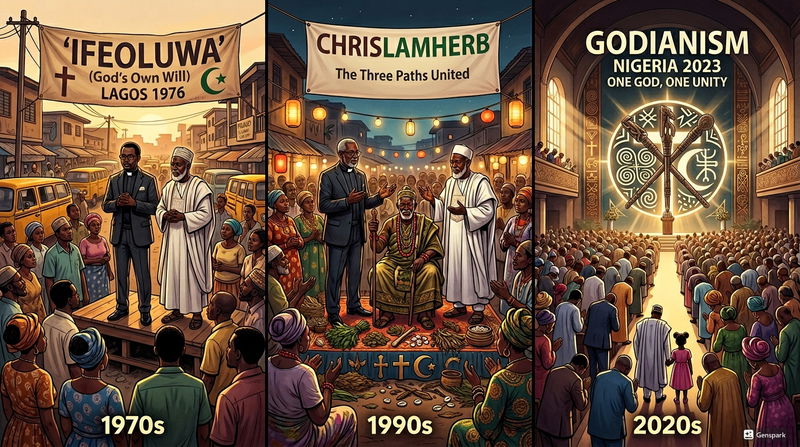
The historical trajectory of this movement reveals a calculated blending of the exclusive Gospel with inclusive traditionalism:
Phase 1: Godianism: Emerging in the late 1940s and persisting through various iterations, this ideology combines Igbo traditional beliefs with a universalist interpretation of the Creator (Chineke), claiming that all Abrahamic faiths are merely derivatives of this ancient traditional source
Phase 2: The Ifeoluwa Mission (1976): Founded by Tela Tella, this movement—often called "Chrislam"—was built on the ideology that Christianity and Islam are one. It blended the Bible and the Quran, encouraging followers to view the two faiths as different paths to the same God.
Phase 3: Chrislamherb (1989–1990): The movement expanded under Dr. Samsindeen Saka, who founded "Chrislamherb." The addition of "herb" was a deliberate inclusion of Herbalism (Traditional African Religion). Saka, the son of a Muslim herbalist, sought to unify the three major spiritual pillars of Nigerian life into one unified body.
The Danger of Religious Counterfeits
The greatest danger of idolatry is not always open rebellion against God. Often, it is the subtle replacement of truth with something that appears similar but ultimately leads away from Him.
The apostle Paul warned the Corinthian church about this danger:
“For Satan himself masquerades as an angel of light.” (2 Corinthians 11:14, ESV)
Spiritual deception frequently presents itself in the language of unity, enlightenment, or spiritual power. Yet if it diminishes the uniqueness of Christ or the authority of the gospel, it leads away from the truth revealed in Scripture.
A Call for Discernment

The struggle that Israel faced in Canaan continues in every generation. The question Elijah asked on Mount Carmel still echoes today:
Who is the true God?
The answer of Scripture remains unchanged. The God of Abraham, Isaac, and Jacob the God revealed fully in Jesus Christ is the one true Lord.
For the church today, the response must not be fear or hostility but faithful discernment. Believers are called to hold firmly to the truth of the gospel while demonstrating humility, love, and clarity in a world filled with competing spiritual claims.
As Elijah declared before the people of Israel, so the church must continue to proclaim:
“The Lord, He is God.”
And as the apostles proclaimed in the early church:
“And there is salvation in no one else, for there is no other name under heaven given among men by which we must be saved.” (Acts 4:12, ESV)

Comments
No comments yet. Be the first to comment!