
THE ARCHITECTURE OF PURPOSELY
Divine Order, Biological Synergy, and the Mandate of Excellence
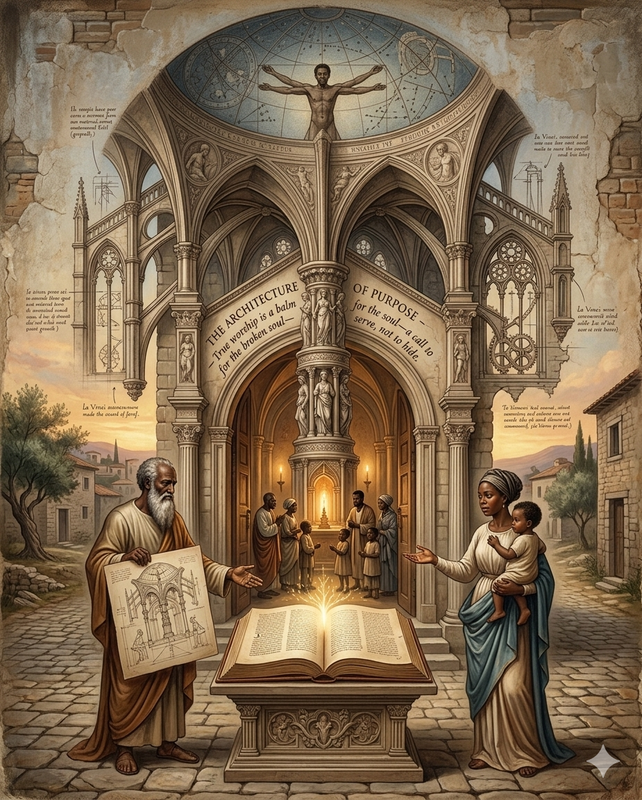

The narrative of human existence is often framed as a quest for identity. We ask, "Who am I?" and "What is my purpose?" Yet, the most profound answer lies not in individual isolation, but in realizing we are components of a larger, grander design. The beauty of diversity and the strength of unity are not contradictory concepts; they are the two pillars upon which functional existence—both biological and spiritual—is built.
When we examine the tapestry of creation, we observe a recurring mandate: the necessity of specific, non-interchangeable assignments. To understand why we must excel in our unique roles, we must delve into biblical theology regarding order and the scientific laws of integrated systems.
The Biblical Theology of Distinction and Order
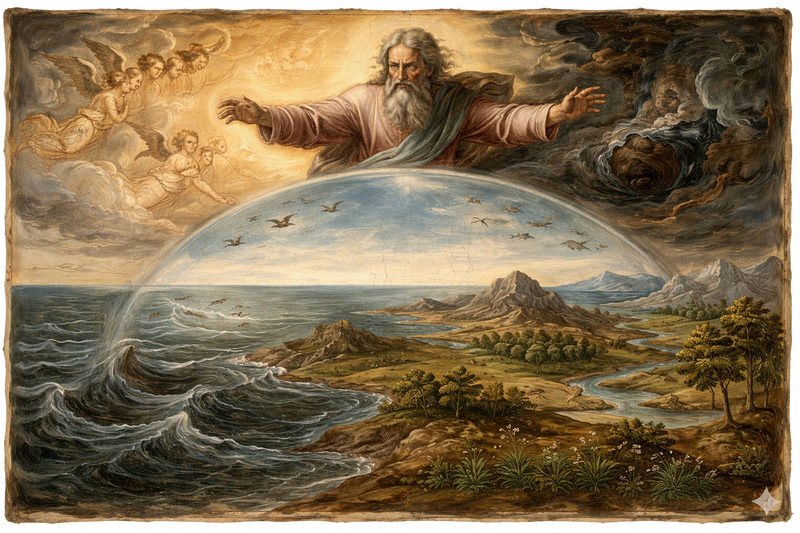
In Scripture, God is consistently revealed as the Architect of Order. The Creation account in Genesis 1 is a masterpiece of categorization and separation. God separated light from darkness, the waters from the firmament, and the dry land from the seas. This act of "separation" was not alienation, but definition. By defining the boundaries of each element, God enabled them to function with purpose.
The Example of Israel: One Nation, Many Assignments
Have you ever wondered why God appointed specific tasks to specific tribes of Israel? Why could one tribe not simply carry out another's duty? It was not because God is strict or restrictive, but because He understands the principle of life: We are one body, but we have different functions.
In the Old Testament, God established a clear structure. Even within the tribe set apart for sacred service—the Levites—there was no "one size fits all." God divided them into specific households, each with a precise mandate no other group could fulfill.
The Three Houses of Levi: Precision in Service
The Levites were divided into three main families, descended from Levi’s sons: Gershon, Kohath, and Merari. Each had a distinct role; the work of one could not be performed by another.
The Kohathites were entrusted with the most sacred objects: the Ark of the Covenant, the Table of Showbread, the Lampstand, and the Altars. Because these items were holy, they were carried on poles on their shoulders, and they were forbidden from touching them directly, lest they die. Their role required reverence, precision, and spiritual sensitivity.
The Gershonites: Their responsibility was the fabric and coverings of the Tabernacle—the curtains, hangings, and tent coverings. Their work was essential to protect the sanctuary and maintain its dignity, yet it was entirely different from the work of the Kohathites. They were given ox carts specifically to carry these large, soft materials.
The Merarites were assigned the structural framework: the heavy wooden frames, bars, pillars, bases, pegs, and cords. Their work demanded physical strength and organizational skill. They received the most carts and oxen because their load was the heaviest. Without them, the Tabernacle could not stand.
Numbers 4:19-20 emphasizes this order: "Do this so that they may live and not die when they come near the most holy things..."
This reveals a profound truth: Order is an expression of God's love and protection. Just as every part of a machine has a specific screw or gear that fits only one place, every person and family has a place where they fit perfectly and function best.
Danger of Usurping Roles
The rebellion of Korah, Dathan, and Abiram in Numbers 16 serves as a solemn warning. They challenged the authority of Moses and Aaron, wanting the priesthood and sacred roles for themselves. They essentially wanted to leave their own "lane" and occupy another. Their judgment serves as a reminder: Function determines destiny. When an individual attempts to operate outside their assigned grace or calling, they disrupt the flow of the entire system, leading to spiritual chaos.
The New Testament Reality: One Body, Many Members
In the New Testament, this theology of order transitions into the doctrine of the Body of Christ (1 Corinthians 12, Romans 12, Ephesians 4).
The Apostle Paul writes:
"For as the body is one and has many members, but all the members of that one body, being many, are one body, so also is Christ. If the whole body were an eye, where would be the hearing? If the whole were hearing, where would be the smelling? But now God has set the members, each one of them, in the body just as He pleased."
The eye represents vision, insight, and leadership.
The Hand: Represents action, service, and practical work.
The Feet represent movement, evangelism, and foundation.
The biblical premise is clear: God distributes these gifts according to His wisdom. Seeking a gift or assignment that is not your own questions the Creator's design.
The Scientific Analogy: Systems That Work

This spiritual truth is mirrored perfectly in the physical world. The blood cells is not just poetic but scientifically accurate.
The Biology of Cells
Consider the body:
Red blood cells carry oxygen to keep you alive.
Red Blood Cells carry oxygen to keep you alive. White Blood Cells fight infection and protect you from disease.
What would happen if the white blood cells decided to stop protecting the body and perform the job of red blood cells?
The result would be catastrophic. The body would be left defenseless against viruses and bacteria, and the whole system would collapse or become sick.
In biology, every cell contains the same DNA, yet a muscle cell does not try to be a brain cell. It undergoes differentiation—it activates only the parts of the code necessary for its specific assignment. If a cell loses its identity and starts functioning outside its design, we call it cancer—unauthorized growth that destroys the host. This is a powerful picture: when we neglect our role to do another's, we bring disorder to the Body.
The Principle of Systems Integration
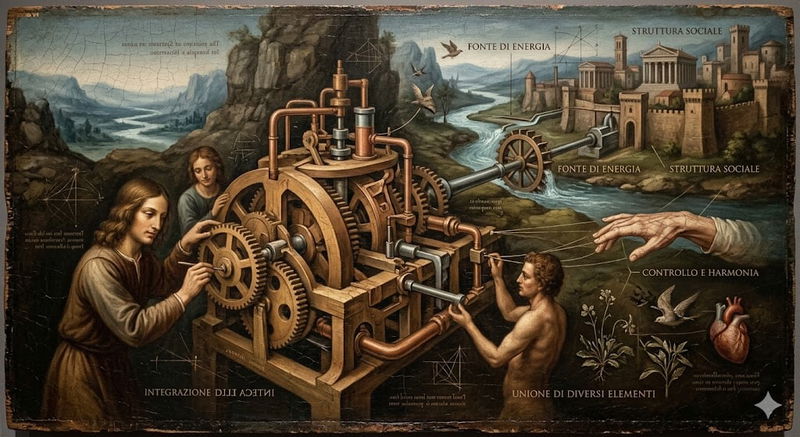
In modern technology and engineering, we see the same law. Complex systems work because different parts specialize.
Each part handles one specific task perfectly.
Interoperability: Because they excel at their jobs, they work together smoothly.
If every part of a computer tried to be the screen, the machine would not work. We must realize we are one, but different.
The Trap of Comparison and the Call to Excellence
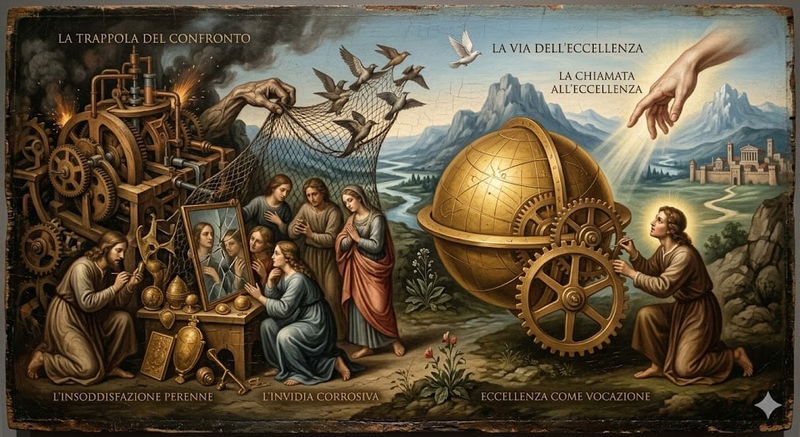
Why do we struggle so much with staying in our lane?
We often look for validation in the visibility of a role rather than its vitality. We see the "leader" or the one handling the "holy objects" and assume their role is more important than the one handling the "curtains" or the "frames." But in a high-performance system, the unseen work is often more critical than what is seen. The Tabernacle could not exist without the Merarites' heavy labor, just as a body cannot live without its skeleton.
The Misunderstanding of Success: Society teaches that success is a vertical ladder. However, the kingdom operates on a principle of function. Your success is measured by the perfection of your output, not the height of your status.
The Mandate: Excel in Your Task
The greatest lesson we learn is the definition of true excellence. Many people fail not because they lack talent, but because they try to live someone else's life.
To move from potential to perfection, consider these pillars:
1.Audit Your Identity
Know who you are. Just as God assigned the Kohathites to the Ark and the Merarites to the frames, He has assigned something specific to you. Use the "Passion/Proficiency/Purpose" test. What has God placed in your hands? Do not define yourself by what others do.
2. Disciplined Focus
You have limited energy and bandwidth. If you spread yourself trying to do everything, you will excel at nothing. Learn to say "no" to good things so you can say "yes" to God’s specific assignment for you.
3. Functional Integrity
The Bible says in Colossians 3:23:
"And whatever you do, do it heartily, as to the Lord and not to men."
When you execute your work with excellence, you become a reliable component in God's hand. You allow the person next to you to execute their work well.
Conclusion: The Symphony of Purpose
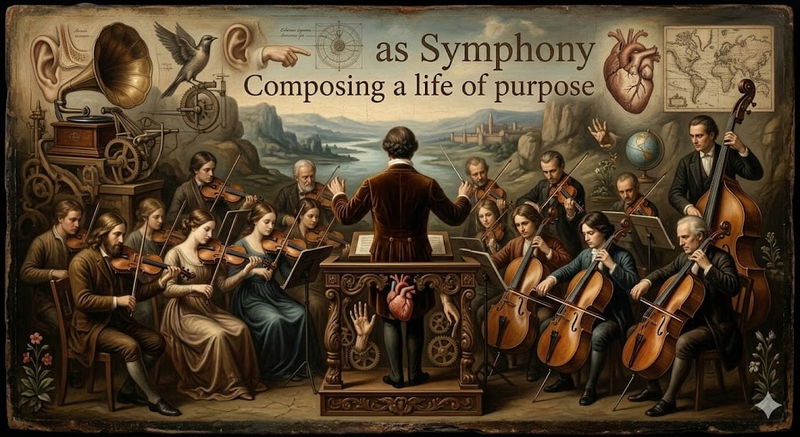
Imagine a symphony. If every musician decided to play the violin because it sounds best, the result would be noise, not music. Only when the percussionist commits to the rhythm, the cellist to the foundation, and the conductor to the vision is beautiful harmony created.
God is not a God of confusion, but of order. The reason He gave different tasks to different tribes, and even different households within the same tribe, is the same reason He gave different functions to different cells: Order brings life.
Let us stop looking at others with jealousy or trying to carry their burdens. Instead, let us focus on being perfect in our tasks. When every part functions well, the whole body is healthy, strong, and grows full of love.
Your place is vital. Your assignment is sacred. Master it, refine it, excel in it.
___-___-___-___-___-___-___-___
Help us grow this page! 🙏
If this message has blessed you and deepened your understanding of the Scriptures, please:
- Subscribe 📮 so you never miss an update.
- React 🔥❤️ to let us know this truth resonated with you.
- Comment 🤔 and share your thoughts or questions.
- Share 📨 it with your loved ones and friends.
Let us all grow together in grace and knowledge. 🕊️

Comments
Thank you for the enlightenment, God bless you
You are welcome, I pray the Lord opens your eyes of understanding and grant you great knowledge to navigate life