
Jacob Have I Loved, Esau Have I Hated
Understanding The Choice Of God
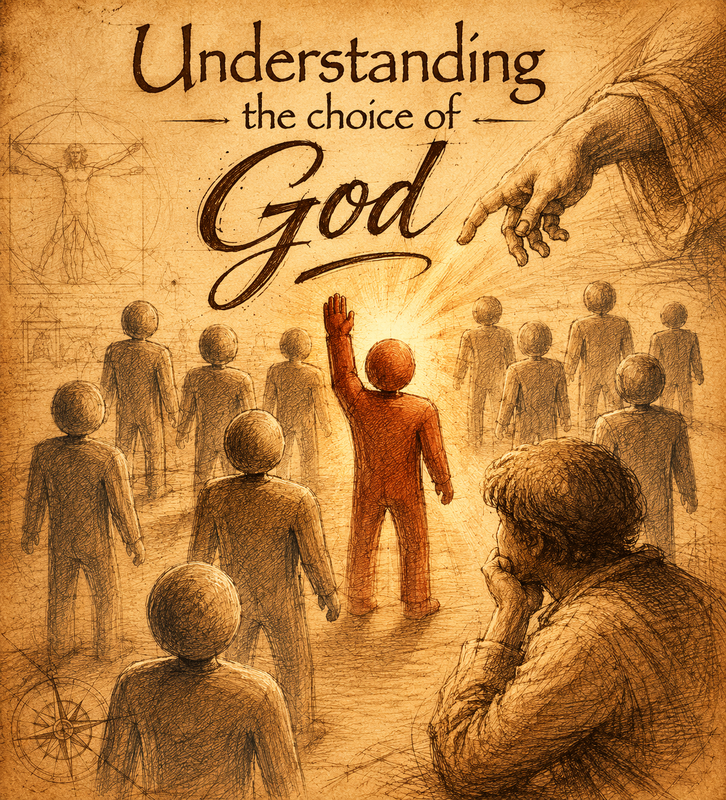

As it is written, Jacob have I loved, but Esau have I hated. Romans 9:13 (KJV)
This is one of the Bible verses people have been trying to understand for generations. It often raises questions: Why would God "hate" anyone? Was it just random selection? Let us dive in deep into the scripture to get understanding.
The God Who Sees The End From The Beginning
God the Almighty is Omniscient. He knows the end before the beginning. He does not look at just the moment; He looks at the trajectory of a life. He sees the heart, the choices, and the final destination. When God made this statement concerning Esau, He was looking ahead. He saw Esau’s actions, and He saw the way he was living his life.
There is a warning in
Proverbs 14:12: "There is a way which seemeth right unto a man, but the end thereof are the ways of death."
Esau was walking a path that seemed right to him. He lived for the present moment, satisfying his desires, but he ignored the eternal consequences. God, who sees everything, knew that Esau’s heart was set on the wrong things.
The Character of Esau
Esau was the firstborn. By natural right, he was the one who was supposed to carry the blessing of God and the covenant to his next generation. The Bible describes him as a rugged outdoorsman, a man of the field, physically strong and skilled. But spiritually, he was heavily driven by his immediate physical appetites rather than spiritual matters.
The New Testament describes him clearly in Hebrews 12:16 as a "profane person". This means he treated holy things as if they were common and worthless. His character can be summarized as:
- Impulsive and Careless: He made decisions based on feelings and hunger, not on faith or wisdom.
- Profane and Godless: He had no deep respect for spiritual things or the things of God.
- A Man of Flesh: He was a glutton, driven by what his body wanted. The Bible teaches that gluttony is a sin, for it makes food and pleasure an idol in the heart that takes the place of God.
Why Did God Say "I Hated Esau"?
When the Bible says God hated Esau, it does not mean God had emotional hatred or malice towards him. In the Hebrew understanding, this word often means to reject or to love less in comparison. God rejected Esau’s path and his priority.
Esau literally left God for food. For the sake of a temporary meal, he sold his birthright—the spiritual privilege and connection to the covenant that belonged to him. He worshipped his stomach more than he worshipped God. He exchanged eternal value for something of shame. Because he treated the things of God with contempt, God moved on to the one who valued what He offered.
The Grace Upon Jacob
God moved on to the one called "Jacob." The very name Jacob means "supplanter" or "one that is not straight in his doing" a deceiver, a trickster, a man who used his own schemes. Jacob was not perfect. He had flaws, he made mistakes, and he was not a "straight" person by human standards.
But here is the beautiful theology of God's grace: God pursues those who are imperfect.
This story reminds us that God does not require you to be a flawless, perfect person before you come to Him. He does not call the qualified; He qualifies the called. While Esau had the natural advantage and the strength of the body, Jacob had a hunger for the blessing. He valued the things of God more than anything else, even when he didn't fully understand how to walk with God yet.
As the Lord declares in Isaiah 45:19:
"I have not spoken in secret, in a dark place of the earth: I said not unto the seed of Jacob, Seek ye me in vain: I the Lord speak righteousness, I declare things that be right."
This is a promise that stands forever: No matter your past, no matter how crooked you think your ways have been, whenever you genuinely seek God with all your heart, He will always make Himself available. Your seeking will never be in vain.
Conclusion
In the end, we see the difference between two lives. Esau became wealthy, he had lands, cattle, and all the material things his heart desired. He lived for this world and he had the rewards of this world. He was full, he was satisfied, and he was rich in earthly things.
But Jacob? Jacob carried something heavier and more precious. Jacob carried the presence, the purpose, and the promise of God.
Esau was wealthy but Jacob was carrying God.
That is the greatest difference anyone can ever make. You can have all the money in the world, but if you do not have God, you have nothing. But if you have God, even if you have nothing else, you have everything.
This is the mystery of the Kingdom that the Apostle Paul understood so well, as written in 2 Corinthians 6:10:
"As sorrowful, yet alway rejoicing; as poor, yet making many rich; as having nothing, and yet possessing all things."
Esau had everything the world could give, but he lost the Spirit. Jacob seemed to have nothing but trouble in his journey, yet because he carried God, he possessed the whole world in promise. Choose to carry God, and you will never be empty.
___-___-___-___-___-___-___-___
📢 INTERACT WITH THIS ARTICLE 📢
Please copy, edit, and drop your comment below:
✅ Name:
[Your Name]
✅ What I learned from this article:
[Write your answer here]
✅ How I will implement this knowledge:
[Write your answer here]
✅ Subscribed: ✅ Done
✅ Suggestions for improvement:
[Write your answer here]
✅ Shared: ✅ Shared with groups, friends, and family
Help us grow this page! 🙏
Let us all grow together in grace and knowledge. 🕊️

Comments
No comments yet. Be the first to comment!